The mountain bongo is not just one of the most visually striking antelopes in Africa — it’s also one of the rarest. This elusive, forest-dwelling subspecies is found only in the montane forests of central Kenya. With fewer than 65 individuals left in the wild, it teeters on the edge of extinction1.
Vanishing Stripes
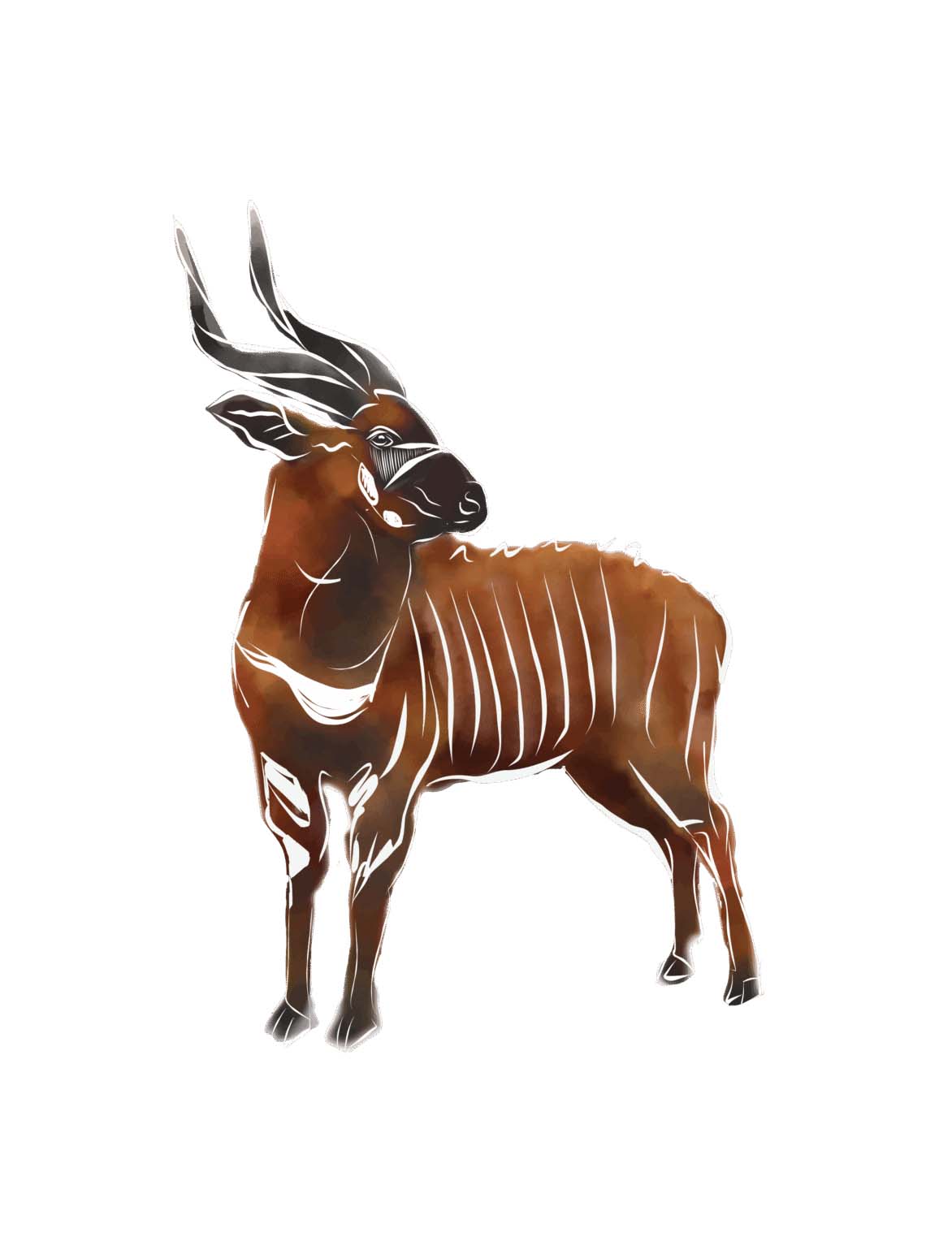
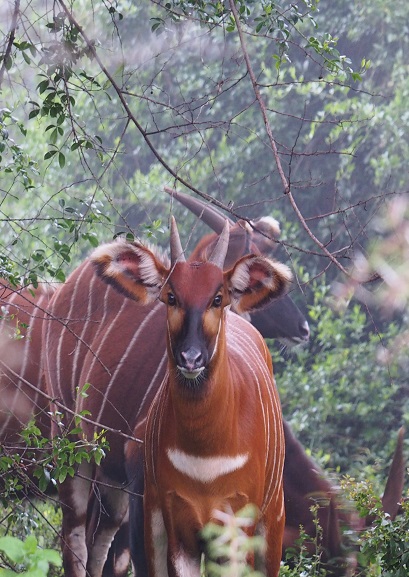
Easily distinguished by its rich chestnut-red coat and bold white vertical stripes, the mountain bongo blends seamlessly into dense vegetation — despite being as large as a cow. Both males and females sport spiraled horns, though males’ are thicker and curve outward with age, while females’ tend to be thinner and more parallel.
As they age, males often darken to a chocolate brown or even black hue. A white chevron marking between the eyes and a ridge of mane-like hair along the back complete their unmistakable look2.
Life in the shadows of the Forest
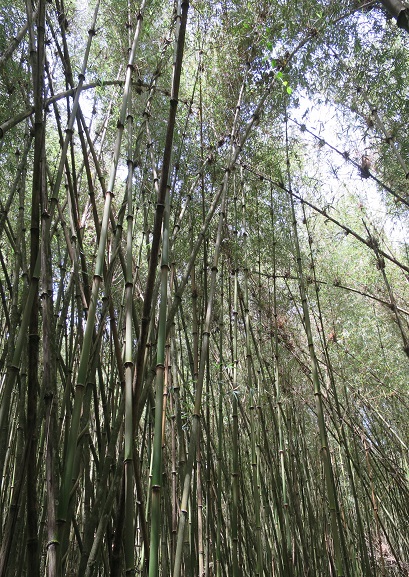
Mountain bongos are primarily nocturnal or crepuscular, emerging at dawn or dusk to browse quietly on forest undergrowth. They are highly specialized for life in dense, high-altitude forests between 2,000 and 3,000 meters elevation 3.
Agile and stealthy, they can move almost silently through thick bush — often laying their horns flat to avoid getting caught.
Their diet consists of leaves, shoots, vines, bark, and herbs, often supplemented with essential minerals found in salt licks4.
Where Are Mountain Bongos Found?
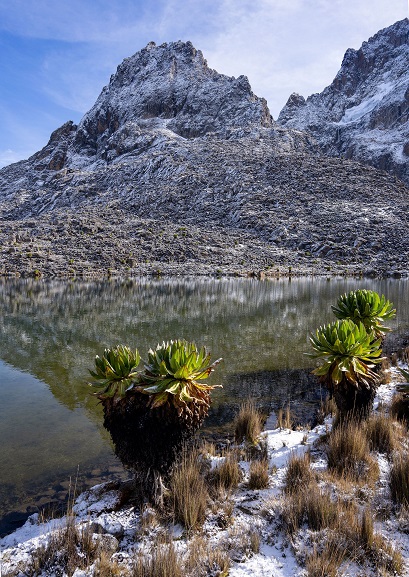
Today, the mountain bongo survives in just a few isolated pockets of forest across central Kenya, in what are often called the Water Towers of Kenya — regions that supply much of the country’s fresh water5:
Note: While Mount Elgon is one of Kenya’s water towers, it has never supported mountain bongo populations6.
Why Are They Disappearing?
The mountain bongo has suffered a catastrophic population collapse over the last four decades. The key threats include:
Habitat loss and degradation due to illegal logging, agriculture, infrastructure expansion, and charcoal burning
Poaching, often with hunting dogs
Disease transmission from domestic livestock, particularly diseases like rinderpest and malignant catarrhal fever7
Genetic isolation, as populations become increasingly fragmented and unable to interbreed
In some locations like Eburu and Mount Kenya, the species is now considered functionally extinct, meaning individuals may remain, but their numbers are too low for natural recovery without human intervention8.
Why Protect the Mountain Bongo?
Protecting the mountain bongo is about more than saving a single species. As an umbrella species, its conservation ensures the protection of entire ecosystems, benefiting species like the African elephant, giant forest hog, leopard, and the colobus monkey.
Some other critically endangered species that inhabit the same areas are: yellow backed duiker, African golden cat and jackson’s mongoose.
Moreover, these forests are essential for regulating water supplies for millions of people. Preserving the mountain bongo’s habitat helps secure Kenya’s natural water infrastructure and biodiversity heritage9.
Photo Credit: Robin Around Kenya
References
National Recovery and Action Plan, Mountain Bongo (2026-2030)