
A Species on the Brink
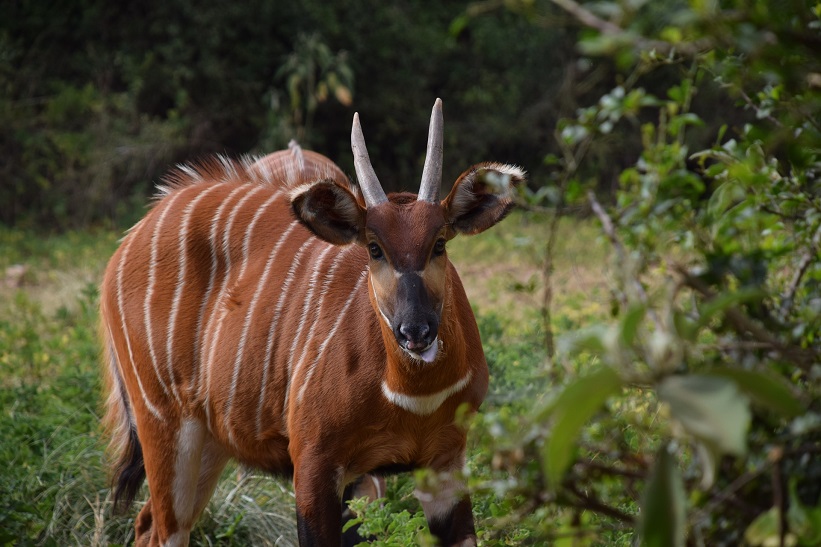
High in the misty montane forests of Mt. Kenya, Aberdares, and Mau, a rare antelope — the Mountain Bongo (Tragelaphus eurycerus isaaci) — moves silently among the cedars and bamboo. Once widespread across Kenya’s highland forests, this elusive species now stands on the very edge of extinction.
By 2019, fewer than 100 individuals remained in the wild, scattered across fragmented forest patches (Kenya Wildlife Service, 2019). The loss of forest cover, illegal hunting, disease, and climate pressures pushed the species into critical danger. In response, the Kenya Wildlife Service (KWS), with partners launched a national plan to bring the mountain bongo back from the brink.
The 2019–2023 Mountain Bongo Recovery & Action Plan
The National Recovery and Action Plan for the Mountain Bongo (2019–2023) was developed under the Wildlife Conservation and Management Act (2013) to serve as a blueprint for saving the species. Its central vision was ambitious yet clear:
“To restore viable, free-ranging and genetically robust mountain bongo populations in their natural habitats by 2050.”
Key Objectives of the Plan:
1. Habitat Protection & Management:
- Secure and restore key montane forests in Mount Kenya, Aberdare Range, Mau Forest Complex, and Eburu.
- Establish Intensive Protection Zones (IPZs) to ensure 24-hour security for known wild bongo habitats.
2. Species Recovery & Population Growth:
- Establish a founder population from ex-situ (captive) sources to supplement the declining wild stock.
- Implement breeding, reintroduction, and monitoring protocols using genetic guidance from research institutions.
3. Community Engagement:
- Empower forest-edge communities as co-managers of bongo habitats through awareness programs, community scouting, and conservation-based livelihoods.
- Promote sustainable tourism models that create direct incentives for local protection of wildlife.
4. Research & Monitoring:
- Apply geospatial technologies, camera traps, and field surveys to track populations, habitat use, and threats.
- Strengthen genetic studies to guide breeding programs and maintain diversity.
5. Policy, Governance & Financing:
- Align the bongo recovery strategy with Kenya’s Vision 2030, National Wildlife Strategy (2017–2037), and Water Tower Protection Plan.
- Secure consistent funding through public–private partnerships and international conservation grants.
To restore viable, free-ranging and genetically robust mountain bongo populations in their natural habitats by 2050.
Central Vision of the 2019–2023 Mountain Bongo Recovery & Action Plan
The Science Behind the Strategy
Every mountain bongo matters — genetically and ecologically. With such a small population, genetic diversity is limited, increasing vulnerability to disease and reducing breeding success. Research by the University of Nairobi and the Smithsonian Conservation Biology Institute has informed breeding programs to manage these risks.
The reintroduction strategy follows IUCN guidelines for species recovery, emphasizing “soft release” in protected forest zones and long-term ecological monitoring. Habitat restoration — including indigenous tree replanting, corridor creation, and bamboo regeneration — ensures that released bongos can survive in the wild without human dependence.
Why Community Action is Central
Conservation cannot succeed without the people who live alongside the forest.
Through community conservancies and partnerships, local residents are helping restore degraded forest, monitor wildlife, and reduce illegal activities. According to Chuka University (2021), over 90% of community members in the Mount Kenya region support the bongo’s return when linked to tangible benefits — jobs, eco-tourism income, and improved forest access.
This is the new face of conservation in Kenya: people-led, science-informed, and future-focused
The Road Ahead — 2025 and Beyond
The 2019–2023 Action Plan laid strong foundations.
In 2024, KWS began consultations to update and expand the plan to reflect new realities — from climate shifts to genetic breakthroughs and changing land-use pressures.
The revised Mountain Bongo National Recovery and Action Plan (2026–2030) is currently under review and is expected to be officially launched in November 2025.
This updated plan will integrate lessons from the past five years, redefine population targets, and align conservation strategies with Kenya’s National Biodiversity Strategy and Action Plan (NBSAP 2030). It will also enhance cross-sector collaboration — bringing together scientists, government agencies, private landowners, and community leaders under one unified goal: to secure a future for the mountain bongo.
Watch This Space
The story of the mountain bongo is still being written — one of resilience, collaboration, and hope. The updated Mountain Bongo Action Plan (2026–2030) marks the next chapter in Kenya’s conservation journey.
Watch this space in November 2025 for the official launch and updates from the field — where science, community, and nature come together to protect one of Africa’s rarest animals.
References
- Kenya Wildlife Service (2019). National Recovery and Action Plan for the Mountain Bongo in Kenya (2019–2023).
- Mount Kenya Wildlife Conservancy (2025). KSA–MKWC Geospatial Collaboration Announcement.
- Capital News (2025). Kenya Receives 17 Mountain Bongos from the USA in Landmark Conservation Effort.
- Chuka University (2021). Community Perceptions and Attitudes Toward Bongo Conservation in the Mount Kenya Region.
- UNESCO World Heritage Centre (2024). Mount Kenya National Park/Natural Forest.
- Vision 2030 Kenya (2023). Water Tower Protection and Forest Restoration Plan.