
Photo: Robin Around Kenya-Mount Kenya Trust
The Living Mountain
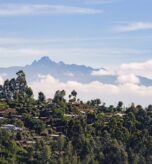
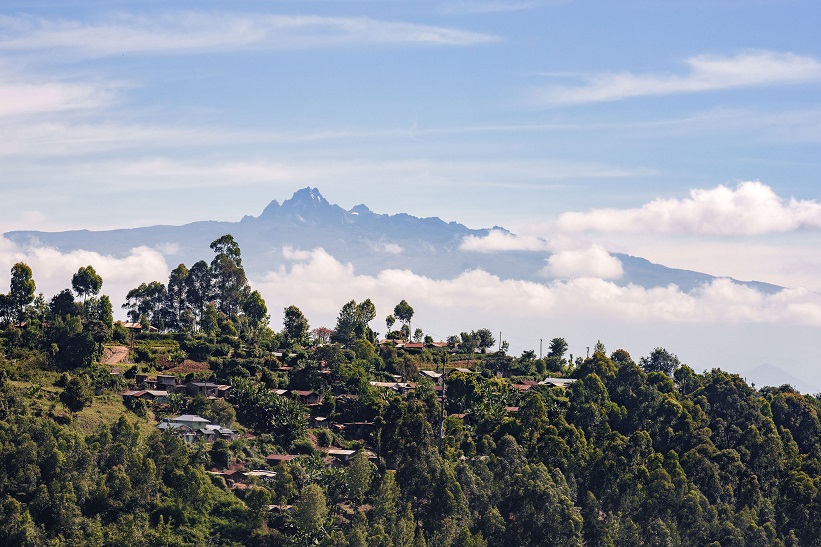
At dawn, Mount Kenya’s peaks rise from a sea of mist, catching the first light over the highland forests below. Streams trickle down from melting glaciers and moss-covered bogs, forming rivers that will flow for hundreds of kilometers — the Tana, the Ewaso Nyiro, and many others.
This ancient volcano is not just the heart of Kenya; it is a living system that sustains millions. Scientists call it one of Kenya’s five “water towers”, natural reservoirs that store and release water across seasons. According to the Rainforest Alliance (2024), Mount Kenya supplies over 75% of the country’s renewable surface water. It fuels hydroelectric power, nourishes farms, and supports wildlife corridors that link forests to savannas.
Beneath its towering podocarpus and cedar trees, life hums quietly — elephants carve trails through bamboo stands, colobus monkeys leap between branches, and in the past, the elusive mountain bongo leaves faint tracks in the mud.
A Mosaic of Life
Mount Kenya’s ecology is a masterpiece of natural zoning.
- Below 2,400 m, montane forest thrives — home to elephants, giant forest hogs, and endangered birds.
- Between 2,400–3,000 m, dense bamboo stands filter rainfall and anchor soil.
- Above 3,000 m, the landscape opens into moorland, scattered with giant lobelias and senecios adapted to freezing nights and blazing days.
These transitions are not random — they reflect altitude, rainfall, and temperature gradients that shape plant and animal life. UNESCO describes Mount Kenya as “an outstanding example of ecological processes and ongoing evolution in a tropical mountain environment.”
But this system is under stress. Satellite studies have shown increasing forest fragmentation from illegal logging, encroachment, and climate variability (MDPI 2019; Remote Sensing 11, 104). Between 1999 and 2018, parts of the lower montane forest experienced over 20% canopy loss, affecting water yield and wildlife migration.
An outstanding example of ecological processes and ongoing evolution in a tropical mountain environment
UNESCO
The Mountain Bongo: A Symbol of Survival
Few animals embody the fragility of Mt. Kenya’s ecosystem like the mountain bongo (Tragelaphus eurycerus isaaci). Once common in the highland forests, this striking antelope — deep chestnut with white stripes and spiral horns — is now critically endangered, with fewer than 80 individuals estimated in the wild.
Genetic studies by the University of Nairobi (Kariuki et al., 2002) found extremely low genetic diversity among remaining populations — a warning sign for species survival. The bongo’s decline mirrors the pressures facing the forest: habitat loss, disease, predation, and hunting.
Yet, hope is returning. The Ragati Chehe Mountain Bongo Conservation Trust, launched in collaboration with partners such as the Kenya Wildlife Service (KWS) and the Kenya Forest Service, along with Ragati and Chehe Community Forest Associations and County Government, is a new front in species recovery.
Why Conservation Science Matters
Protecting wildlife on Mt. Kenya is ecological economics.
Research by JKUAT (2020) found that ecosystem services from Mt. Kenya forests — including carbon storage, pollination, and water regulation — directly support agriculture and livelihoods in surrounding counties. When the forest suffers, people downstream feel it through reduced rainfall, erratic river flow, and soil degradation.
Endangered species act as indicators of environmental health. If the mountain bongo, elephant, and leopard can thrive, it means the forest is functioning — soils are fertile, rivers are clean, and plants regenerate naturally.
By contrast, their disappearance would signify more than species loss; it would mark the unraveling of a system that underpins Kenya’s food and water security.
Communities: The True Guardians
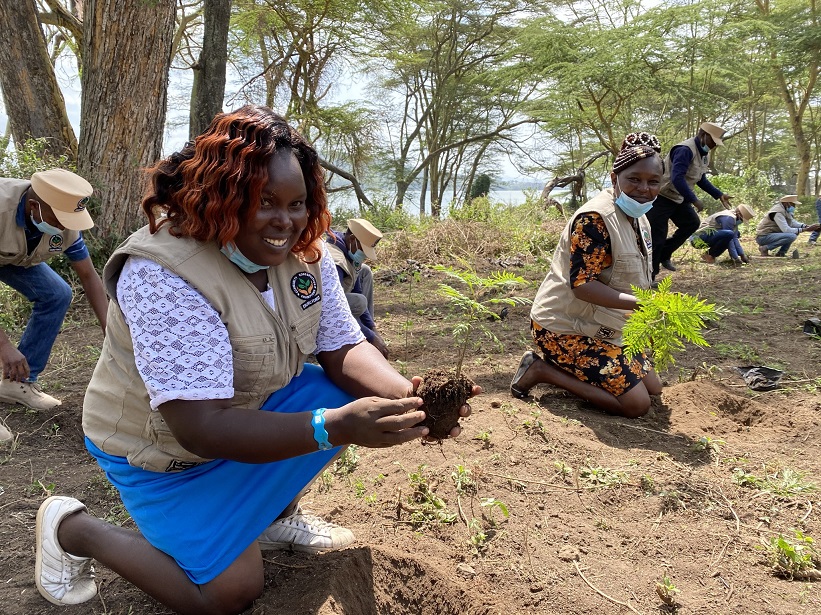
Science alone cannot protect Mt. Kenya — people can. Around the mountain, forest-edge communities are replanting indigenous trees, managing community conservancies, and monitoring wildlife.
Studies from Chuka University (2021) show that over 90% of residents living near Mt. Kenya support bongo reintroduction and sustainable forest management when they benefit from the outcomes — such as eco-tourism income, fuelwood alternatives, and access to conservation employment.
This model — known as community-based conservation — is central to the success of Mt. Kenya’s restoration. It aligns local livelihoods with ecological goals, turning former threats into allies for change.
The Path Forward
Protecting Mt. Kenya demands unity across science, policy, and people.
Governments must continue enforcing environmental laws and research institutions must deepen data collection on biodiversity, forest health, and climate impacts.
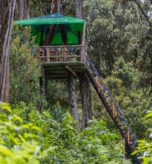
At the same time, community programs need consistent funding and technical support to scale up reforestation, habitat restoration, and anti-poaching patrols. Sustainable tourism operators can help by investing in low-impact infrastructure and conservation awareness.
References
- UNESCO World Heritage Centre. (2024). Mount Kenya National Park/Natural Forest. https://whc.unesco.org/en/list/800/
- Rainforest Alliance. (2024). Catalyzing Impact Investment in the Mount Kenya Landscape.
- Kariuki, L. N. et al. (2002). Genetic variation in the endangered Mountain Bongo. University of Nairobi Repository.
- Chuka University (2021). Community Perception and Attitudes Toward Bongo Conservation in the Mount Kenya Region.
- MDPI Remote Sensing (2019). Fire Mapping and Forest Change on Mount Kenya Using Satellite Data.
- JKUAT SRI (2020). Ecosystem Services and Livelihood Dependence in the Mount Kenya Landscape.
- Vision 2030 Kenya. (2023). Rehabilitation and Protection of Indigenous Forests in the Five Water Towers.